Transmissions from the build

Dev Log

9 entries · newest first

LOG 009
combatfight-stylegearart

Steel to Surge enters the code

The Single Blade fight style now lives in the game, and the D-rank gear has its 3D models.

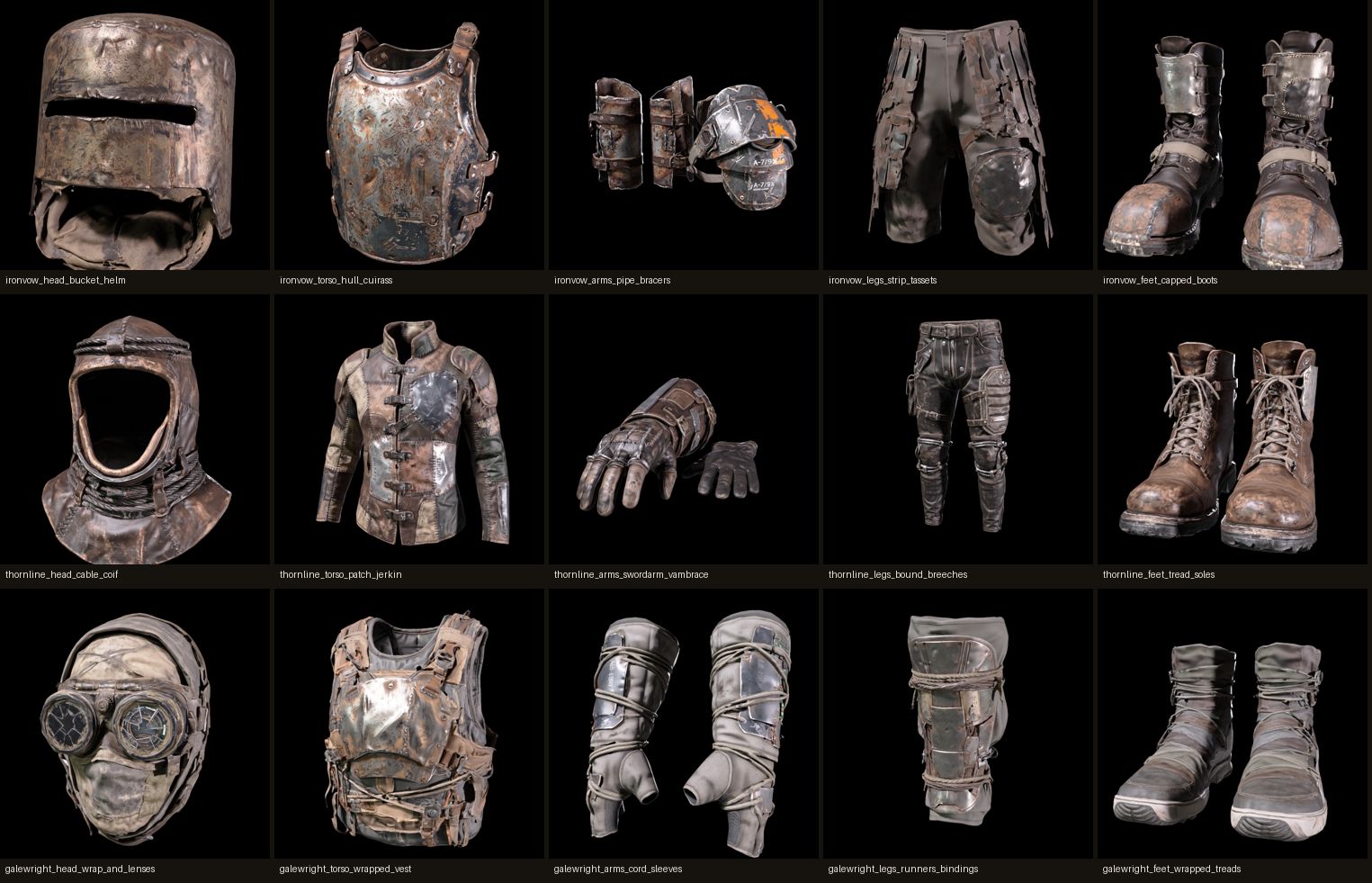
Our own fight style, Steel to Surge, is now in the game's code. The first class is the Single Blade, with three builds: Ironvow the breaker, Thornline the duelist and Galewright the flow. Five stats shape how each one fights: Strength, Dexterity, Speed, Endurance and Focus.

Surge builds up inside every fight through three stages, Kindle, Temper and Fracture, and your swings get faster and more stylish as it climbs. There is no slow motion anywhere, because the world is online. When two blades lock you get a Clash: push, slip or twist, judged by the server in a split second.

The scavenged D-rank armour and weapons now have 3D models, along with the first hour's tools, which are made in separate parts so crafting makes sense (an axe head and a haft, a pot and its lid). Spears and arrows can finally hurt people too. Next up: the first sparring tests.

LOG 008
npcsettlementsporta-cobra

Porta Cobra goes dark, and its people take to the road

The neon city is switched off until it can be rebuilt log by log. Its people didn't vanish: they walk the world now, come to your camp asking to stay, and found camps of their own.

Porta Cobra is coming out of the game for a while. It was built from whole kit pieces, and every building in Fractured Survival is going to be raised the real way: log by log, plank by plank, brick by brick. So the city is switched off rather than deleted. The hall stays cut into the ridge, empty, and everything about the city is kept for the day it's rebuilt on the new system.

Its people didn't go with it. Everyone who lived there is now on the road, the same person with their memories, friendships and grudges. They walk by day, pitch a tent when night falls, and always have somewhere to go: open country a few kilometres off, a camp other travellers have made, or now and then yours. A traveller who reaches your camp asks to stay. Look at them and press E, and they're one of your people from then on.

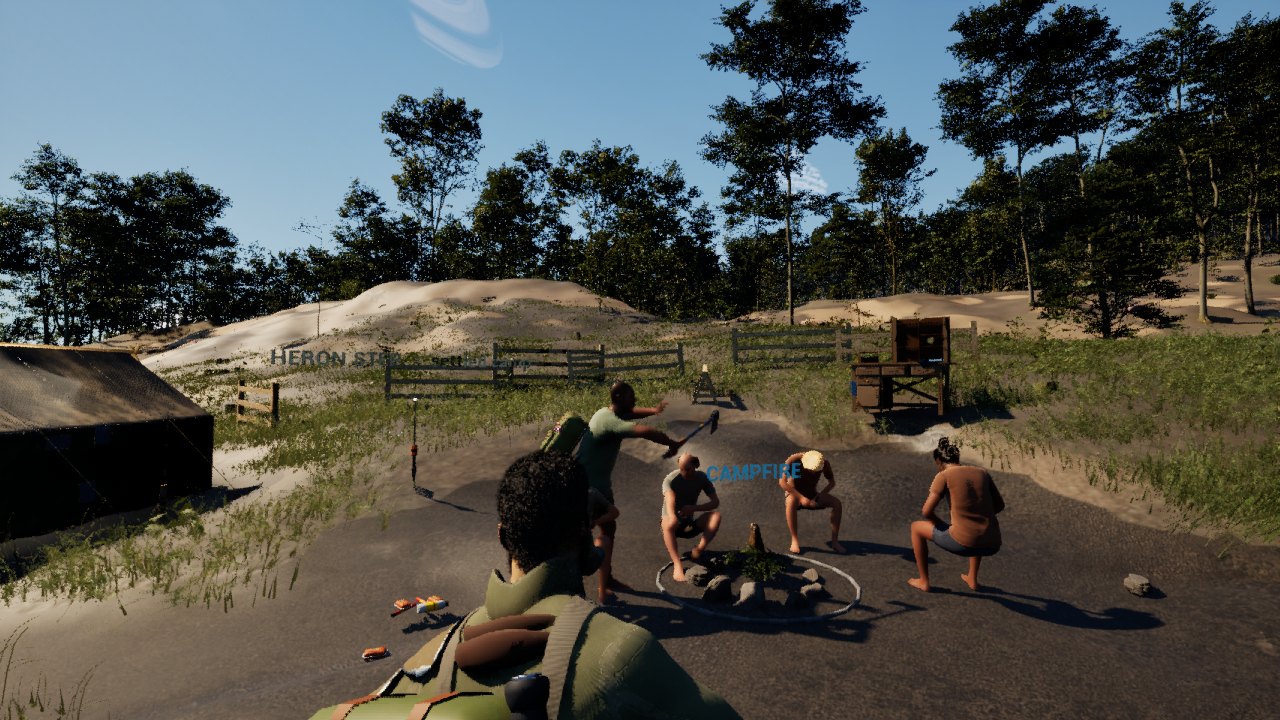
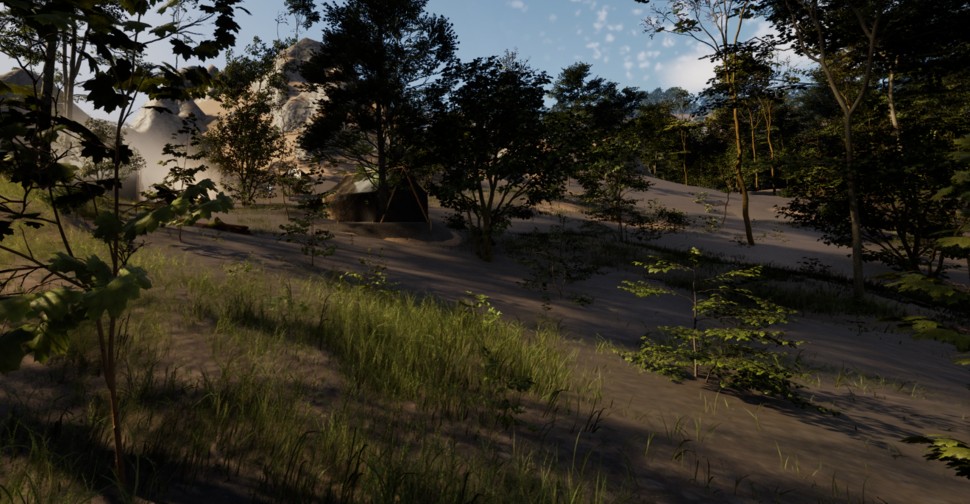
Travellers who walk together long enough settle down. In tonight's test five of them picked a patch of level ground, pitched three tents around a stone, lit their fire and called it Heron Step. That camp is theirs, not yours, and camp life lives it like any other.

Next up: the building system itself, redesigned so a whole house breaks down into sections anyone can follow, from a camp's first cabin to a city's brick streets.

LOG 007
npcanimationbody-languageai

Bodies that talk

Camp NPCs now show how they feel in their posture, layer real gestures from the animation library over whatever they're doing, move with the rhythm of their own voice, and let Claude choose how they carry each line.

The NPCs looked stiff, and their bodies didn't show any emotion. The goal wasn't a checklist of canned animations; it was the small, constant movement that makes a person look alive. The work went in as four layers on top of the existing motion matching, pose search and physics, without changing any of them.

First, posture. How tired, low, uneasy, cold or hungry someone is now bends their back, raises or rolls their shoulders, drops or lifts their head, sets their breathing and moves their weight from leg to leg. Each person also has their own way of moving, drawn from their personality: quick or slow, big or small, a stoop or a straight back, a habit like rolling their shoulders or glancing around.

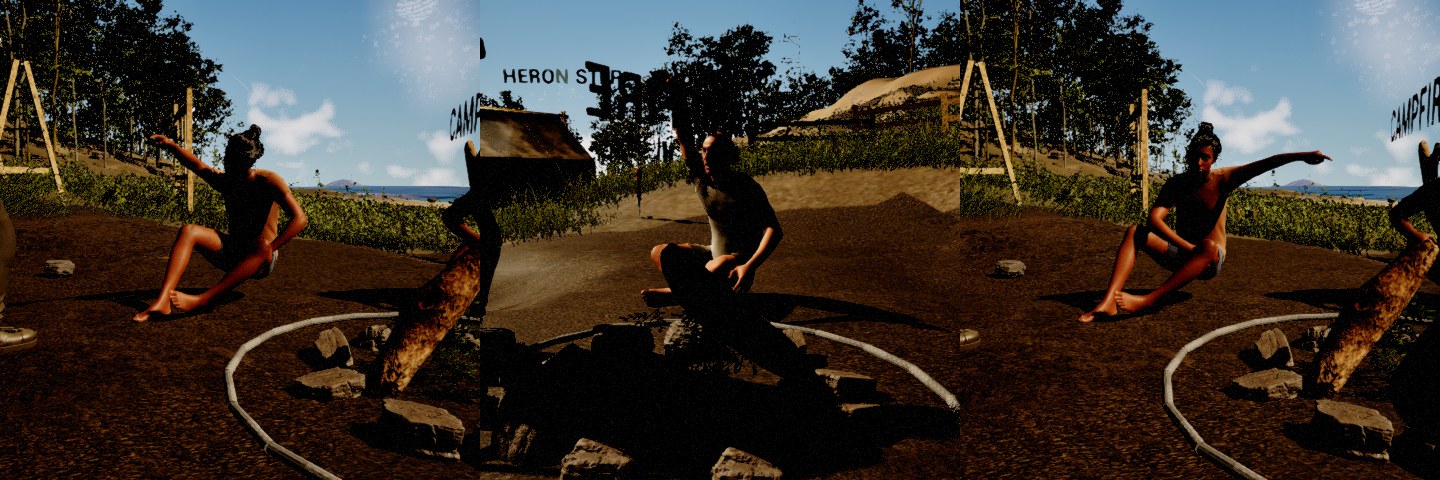
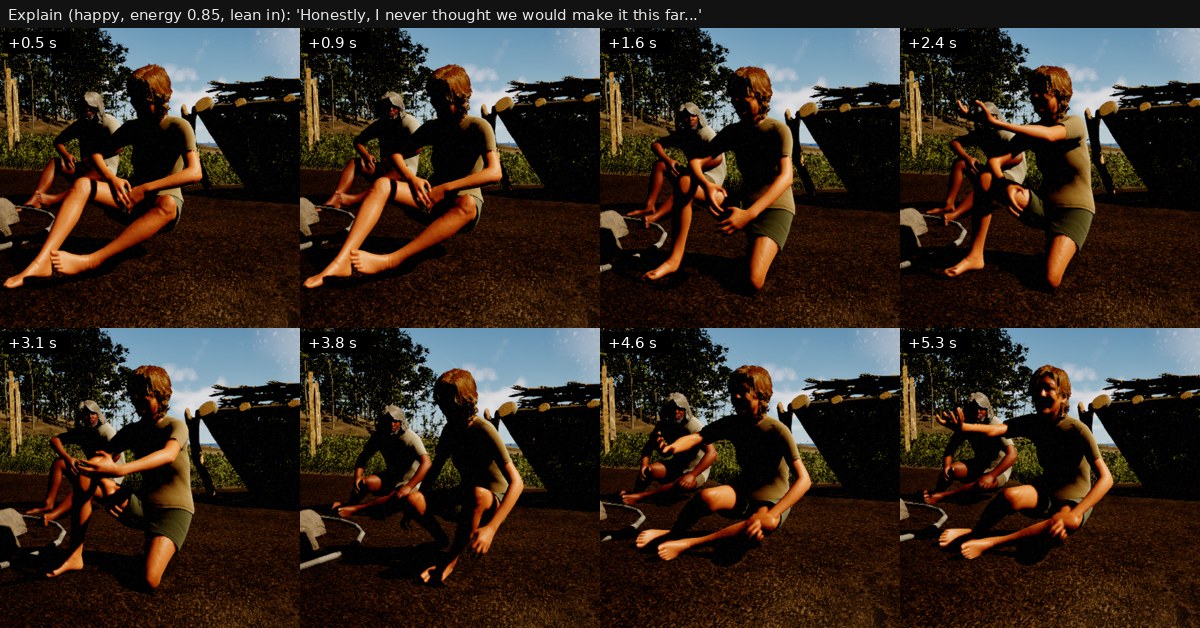
Second, layered gestures. While someone talks, conversation and gesture clips from the animation library are laid over their upper body at part strength, so a talking gesture can play over sitting by the fire or a work pose. The clips follow the feeling of the line: arguing ones when they're heated, laughing ones when they're bright, quieter, sadder ones when they're low. Between lines there's a shiver in the cold, an attentive listening pose, a yawn when they're worn out.

Third, the rhythm of the words. When a line is voiced, the audio itself is read for its stressed syllables and pauses. The chin dips on stressed words, and the leading hand flicks slightly before them, the way a real gesture lands just ahead of the word it stresses. The gesture eases off in each pause. Statements end with a small nod; questions end with a lifted, tilted head while they wait for an answer. People listening nod now and then in the speaker's pauses.

Fourth, Claude chooses the body. Along with the words, an NPC's reply now says how they carry the line: a gesture only when they'd really make one (point, shrug, argue, laugh, shake their head, whisper and so on), how much energy, whether they lean in or back, where they look. These steer the same layers rather than replacing them, so it never turns into a menu of stock moves. In testing, the camp's own conversations came back choosing to just talk, to nod, or to keep still.
LOG 006
npcanimationbody-languageaiemotional-npcs

Eyes first, then the hand

Camp NPCs now look before they move, point at real things around the camp on the word they mean, and react to each other while they talk. A bug that had been switching off their body language mid-conversation is gone too.

The fifth layer of the NPC body language is about where a body is aimed. Eyes lead and the head follows a fraction of a second later. When someone speaks, they look away to find their words at the start of a phrase and come back to whoever they're talking to by the end of it. With several people listening, they speak to each of them in turn, and they end the line looking at someone. Listeners watch the speaker and glance away now and then. People with nothing to do look round at whoever is near.

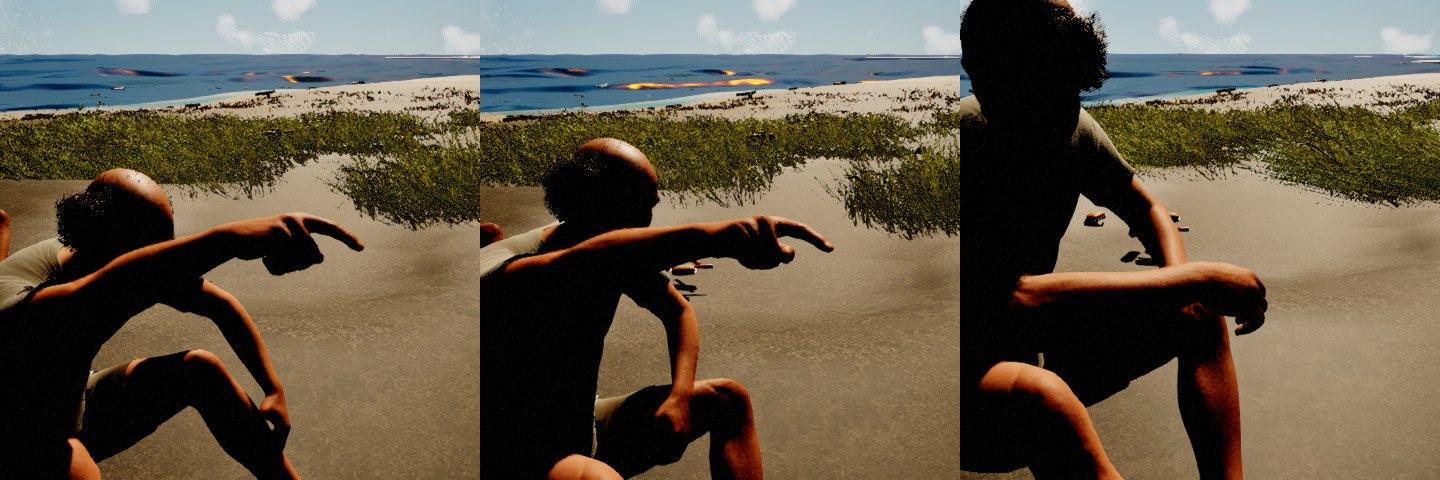
Claude now says what a line points at and which word the gesture lands on. "We do not go past the ridge after dark" can come with a point at the ridge, landing on "ridge". The game works out where that thing really is: a campmate by name, you, the fire, the shelter, the woodpile, the sky, or the woods out there. The arm comes up so it arrives on that word, the index finger goes out, the eyes get there first, and the trunk turns a little toward it. In testing the arm landed within a degree of the fire, the player and a campmate.

The gesture clips are timed to the word too. The game finds the moment in each library clip where the hand is furthest out and starts the clip so that moment lands on the stressed word. Small things fill in around it. A hand beat brings its shoulder forward and shifts the weight. Listeners drift toward the speaker's posture, more so for the warm ones. A person takes a breath and lifts their head just before they speak. Each person keeps their own talking distance: they lean back if you're too close and step in if you're too far.

Testing turned up two problems. When a camp person was first spoken to, the work system gave them a tool-handling component, and the body language treated that as the player's body and switched itself off for good. Their posture, gestures and beats vanished the moment the conversation started. That's fixed. Lyle also spotted speakers dropping from sitting into a kneel and bowing forward mid-line. Those were "sitting" idles that are really kneels, plus some hand-over clips, and they're out.

LOG 005
npcanimationbody-languagehandsemotional-npcs

Fingers that fit

The camp NPCs' fingers now move with the rest of their body language: curled by how they feel, shaped like the gestures they make, opening on the words they stress, and pointing with an index finger.

After the pointing work, Lyle wanted the hands to fit in too. The gesture clips laid over an NPC's body only ever moved the arms down to the wrist, so the fingers stayed however the sitting or standing animation had them. A pointing arm ended in a limp hand.

Each finger now has a curl it eases toward, from straight to a fist. At rest it's a loose curl, with the index finger the least curled and the little finger the most, the way a resting hand falls. Unease, cold and a heated line tighten it toward a fist. A bright, open person talking with energy opens it up. Every finger drifts a little on its own, and the fingers open slightly on each stressed word along with the hand's beat.

When a library gesture clip is playing, the game now reads how curled each finger is in that clip, measured against the clip skeleton's own resting hand so different skeletons line up, and puts that shape on the NPC's hand. The library's hand shapes come through, not just its arm movement. A pointing hand straightens the index finger and folds the rest. Hands stay out of it during work clips and sleep, so a gripped axe stays gripped.

LOG 004
npcsaiemotionspersistence

One person, wherever they go

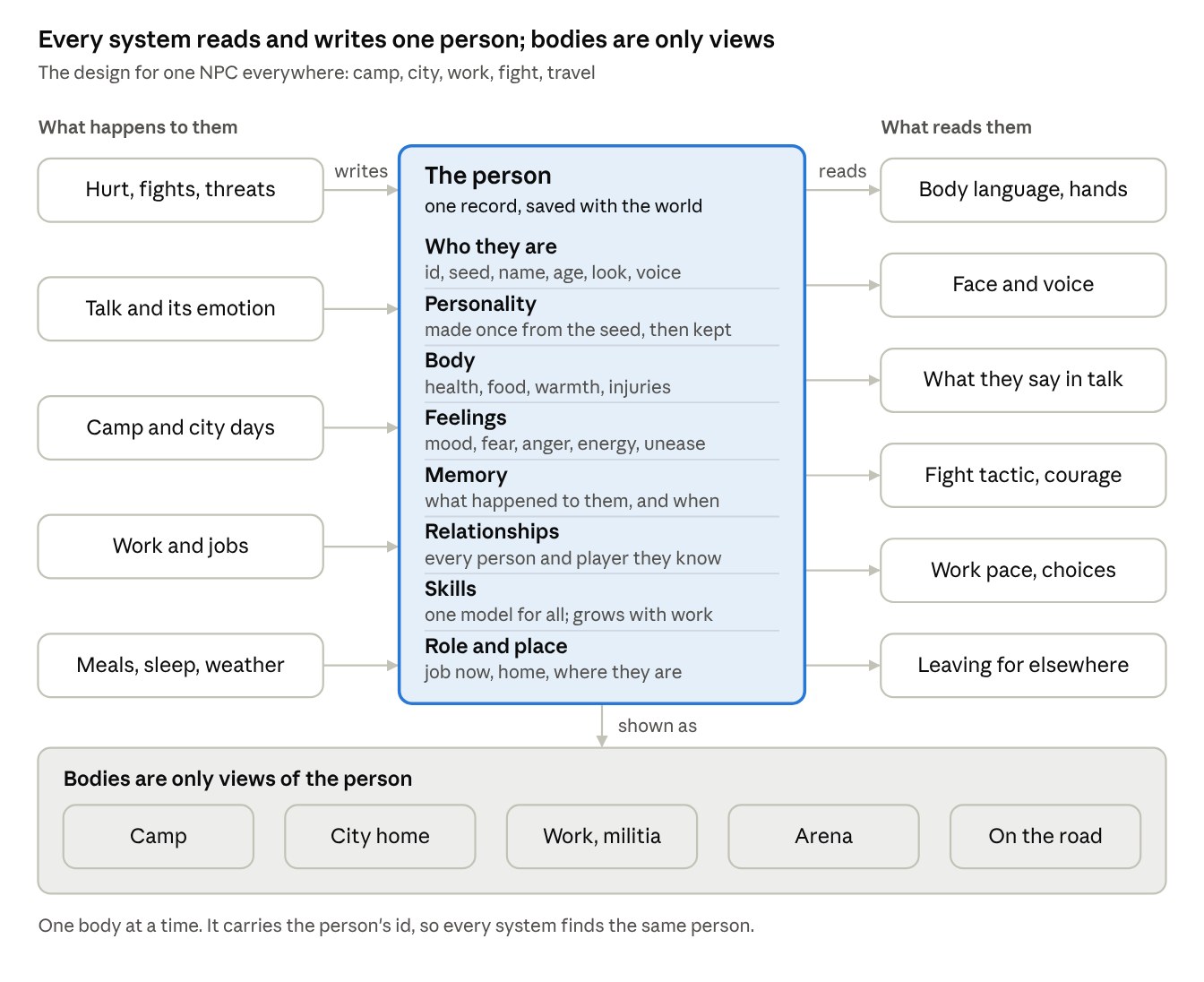
Every NPC is now one person with one record. Their feelings, body, memory, friendships and work follow them from the camp to the city, through a job change or a move.

Until today, an NPC was really several characters held together by a name. The camp knew them one way, the city another, the fighting systems a third, and the talk a fourth. Rename a camp and its people quietly became new people. Send a farmer to the militia and he came back in a fresh body with no memory of the shift.

Now each person has one record that lives with your world. It holds who they are, how they feel, what their body has been through, what they remember, who they like and who they hold a grudge against, and what work they do and how good they are at it. Every body you see is just a view of that person, and every system reads the same record.

It shows in small ways. Make someone angry at the fire and they're still cross when you come back. They're cooling, and they'll tell you why. A camp hand bitten by a wolf is still sore after a reload. The woman who learned your name last night still knows it, and she still remembers the neighbour who shoved her off the woodpile.

It shows in big ways too, because people can move now. A camp person can go to live in Porta Cobra and take their memories with them, and someone unhappy for days will leave on their own. When a camp grows into a village, its people stay exactly who they are. The travellers who come into the city each day are real people now, who come back and remember you.

LOG 003
npcscombatpeople

They fight back

Every NPC can now be struck, and answers as themselves: they fight, run, call their camp, get knocked out, and remember it.

The people of Heron Step now defend themselves and each other. Strike someone and the blow is theirs: their health drops, they hold a grudge against you, and they remember who did it. Whether they fight back or run depends on who they are - their courage, their temper, how hurt they already are. Their campmates come to help them, and wolves, boars or droids on the camp's ground bring them out too.

Nobody dies yet. Beat someone down and they lie knocked out for a while, then get up badly hurt - and the grudge survives a save and reload. Tonight's play test also added a lock-on (middle mouse) and driven strokes that place you at striking distance, so hits land. The fight doesn't feel the way we want yet; better swing animations and physical bodies come next.

LOG 002
websiteroadmap

A new home for Fractured Survival

The site has been rebuilt around Xavier, the trailer is now on the front page, and the roadmap has been brought up to date with the game as it is today.

The old site described an earlier version of the game. This one is built around who the game is really about: Xavier, the companion droid who remembers everything.

The full 3:16 trailer now plays on the front page, alongside stills captured in-engine from the trailer and the Circle of Life films.

The live roadmap has been rebuilt from scratch to match the game today — NPC brains and physical embodiment are done, and work is moving on the character generator, Xavier, cinematic combat, the Horde and the Act 1 asset rebuild.

Dev logs like this one will land here as the work does.

LOG 001
worldfirevfx

The forest burns

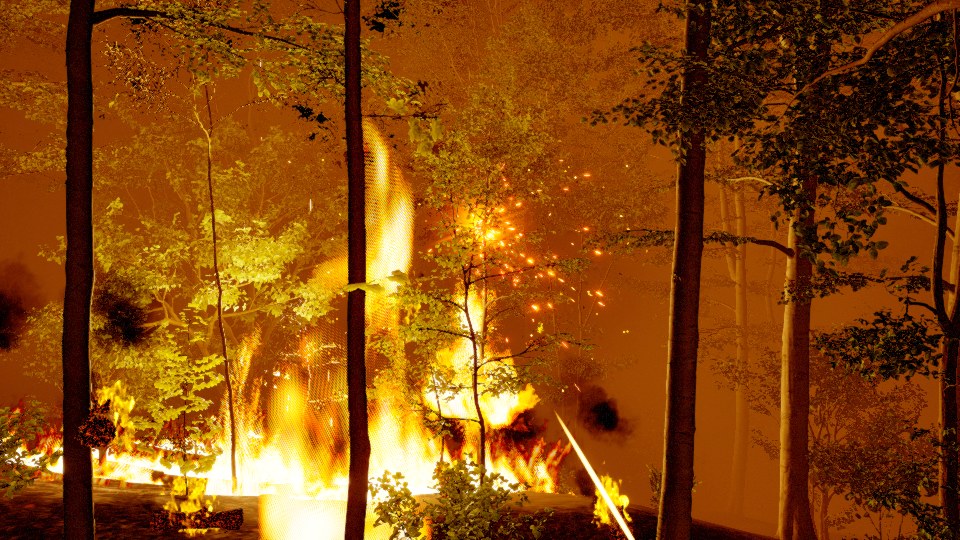
Wildfires now run through the woods as a growing front: trees go up, branches fall, the smoke hangs like fog, and the deer run.

A fire lit in the forest now burns through the leaf litter and the understory as one front that keeps growing, instead of hopping about in patches. The flames come from the new effects library: a wall of flame along the front, the ground it leaves still burning, and tree crowns going up in tall flames that throw sparks.

Burning branches break off, fall, land in a burst of sparks and lie there charred. Some of the burnt trees come down a while later, and you can cut them up. The smoke settles over the fire as a haze that drifts downwind and takes a few minutes to clear, glowing orange from below at night. Deer and other animals near the fire run from it.

The campfire got the new flames too, sized by the wood actually burning, and chopping now throws wood chips.

Dev Log — Fractured Survival